
From massive library compromises to self-propagating worms, the npm ecosystem is under fire—learn how a single line of code can hijack your infrastructure and what you must do to lock down your software supply chain before the next attack strikes.
What Is a Supply Chain Attack?
A supply chain attack happens when someone compromises a piece of software that other software depends on. Instead of attacking your application directly, the attacker targets something your application trusts.
In the JavaScript world, this usually means Npm. Npm is the package manager that nearly every JavaScript project relies on. It hosts over 2.5 million packages, and developers install them without thinking twice. That convenience is also a vulnerability. When a package gets compromised, every project that depends on it becomes a potential victim.
Why Npm Is a Prime Target
Npm wasn’t designed for a world where packages are critical infrastructure.
A few things make it especially vulnerable:
Trust is implicit. When you install a package, you’re trusting every maintainer, every dependency, and every dependency of every dependency. There’s no verification layer between the registry and your machine.
Publish tokens are overpowered. A single npm token gives full publish access to every package on an account. If that token gets stolen, an attacker can push malicious code to any of those packages.
There’s no file scanning. npm doesn’t check what’s inside a package before it goes live.
What This Looks Like in Practice
March 2026 gave us a concentrated view of how these weaknesses play out. In the span of a couple weeks, the npm ecosystem saw multiple serious incidents:
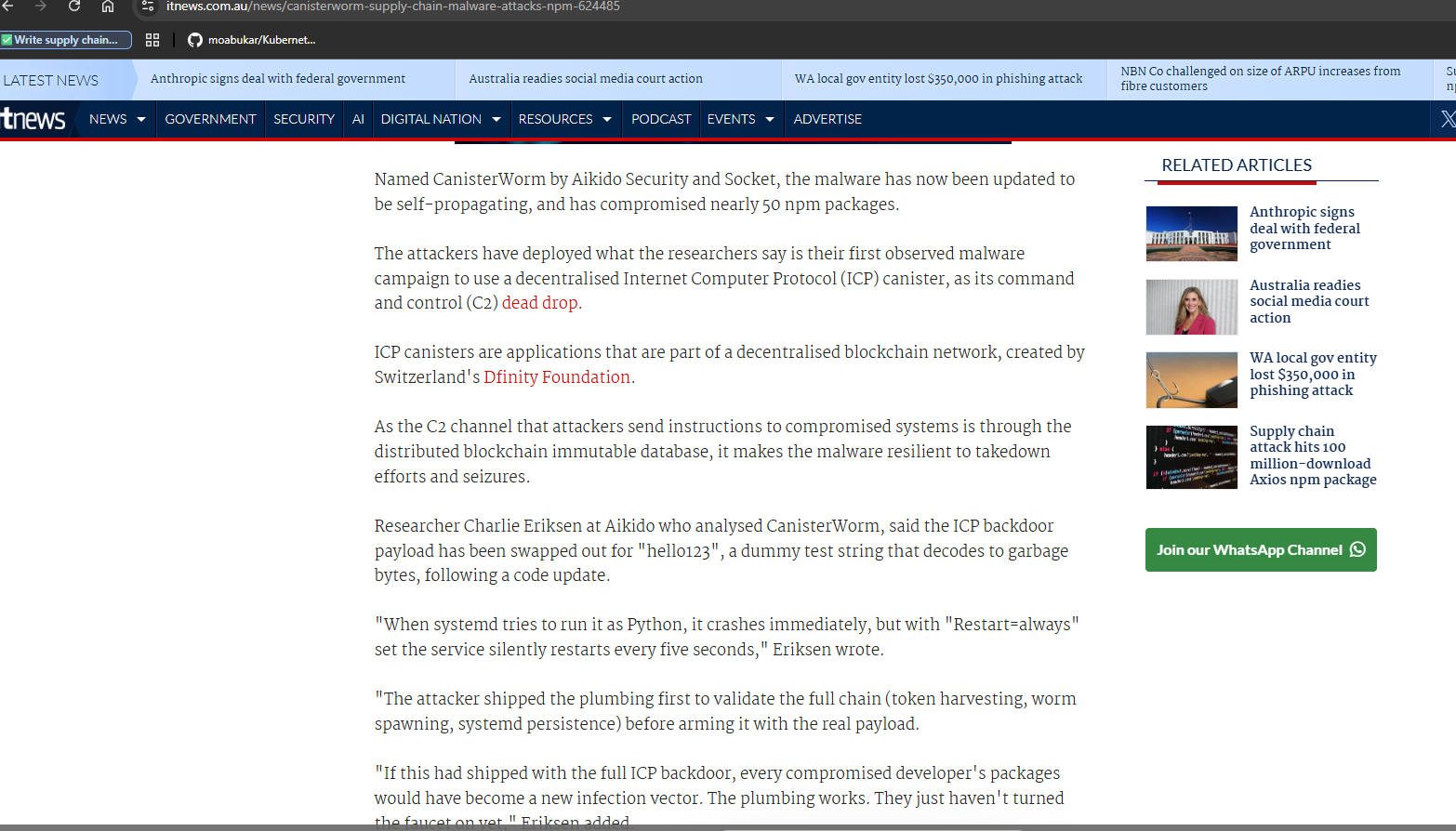
A self-propagating worm called CanisterWorm spread across more than 60 packages by stealing developer credentials and using them to publish infected versions automatically. It started from a single compromised open-source security tool and grew from there.
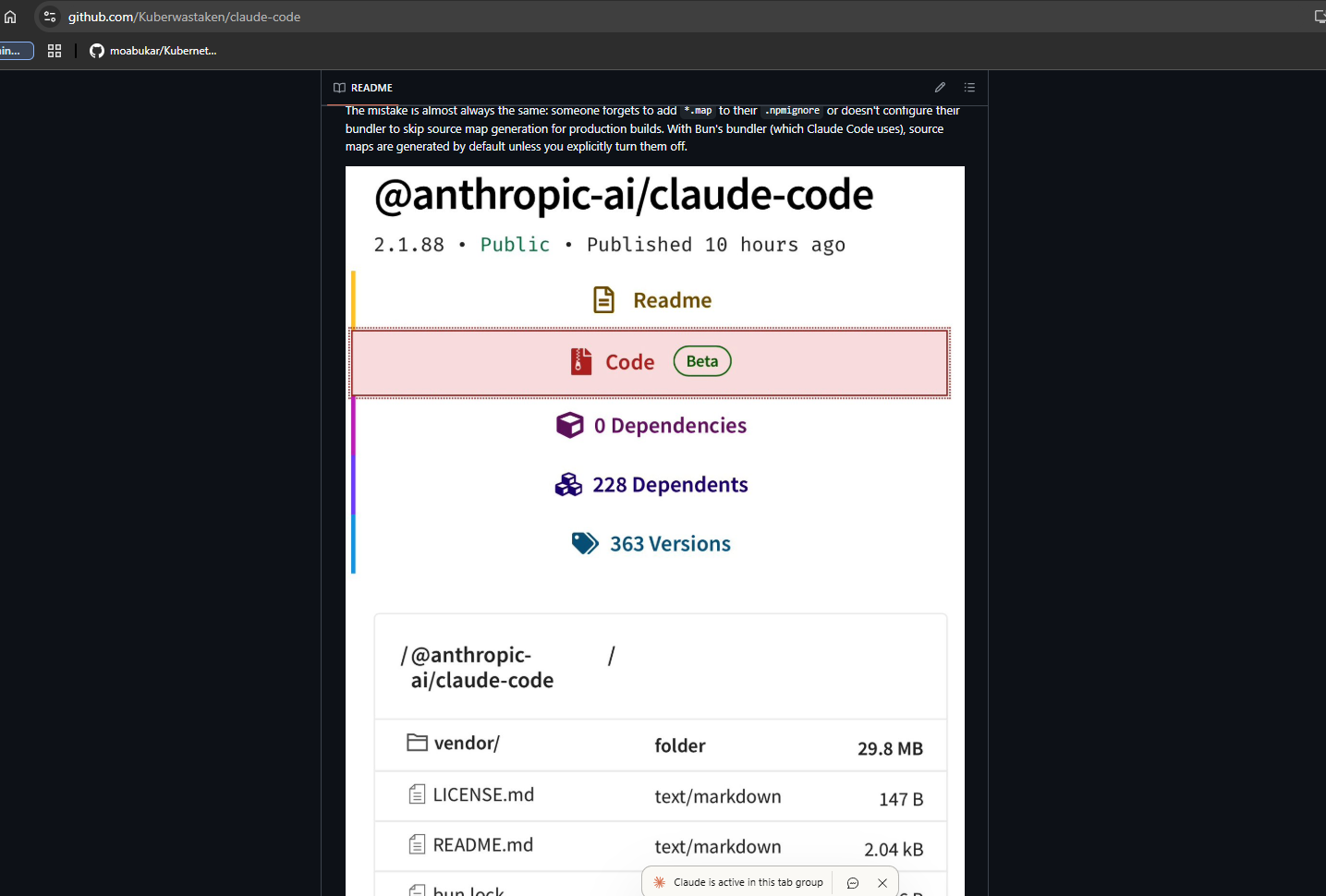
Anthropic accidentally published a source map file in their Claude Code npm package, exposing over 500,000 lines of proprietary source code. The cause was a default build setting that nobody turned off.
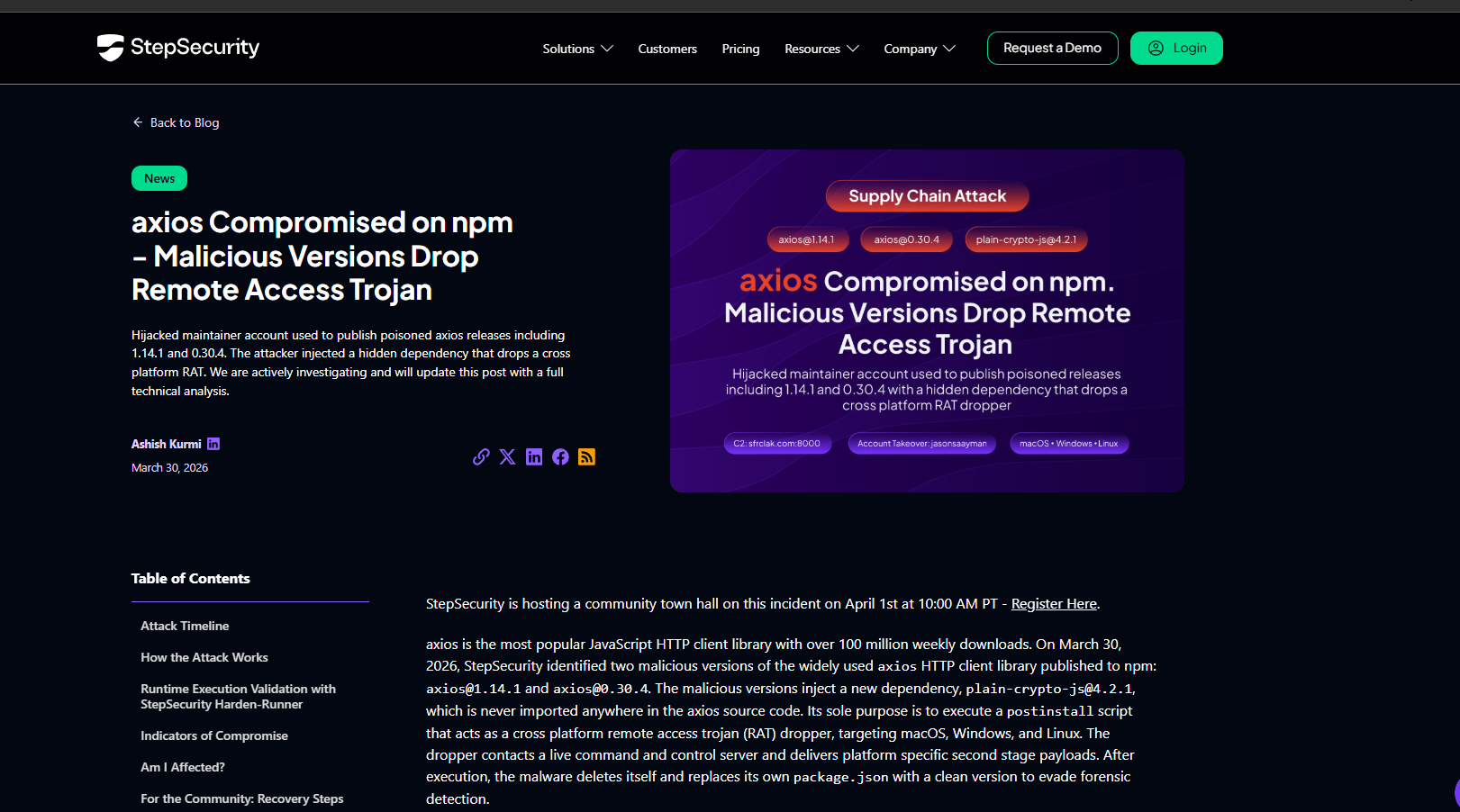
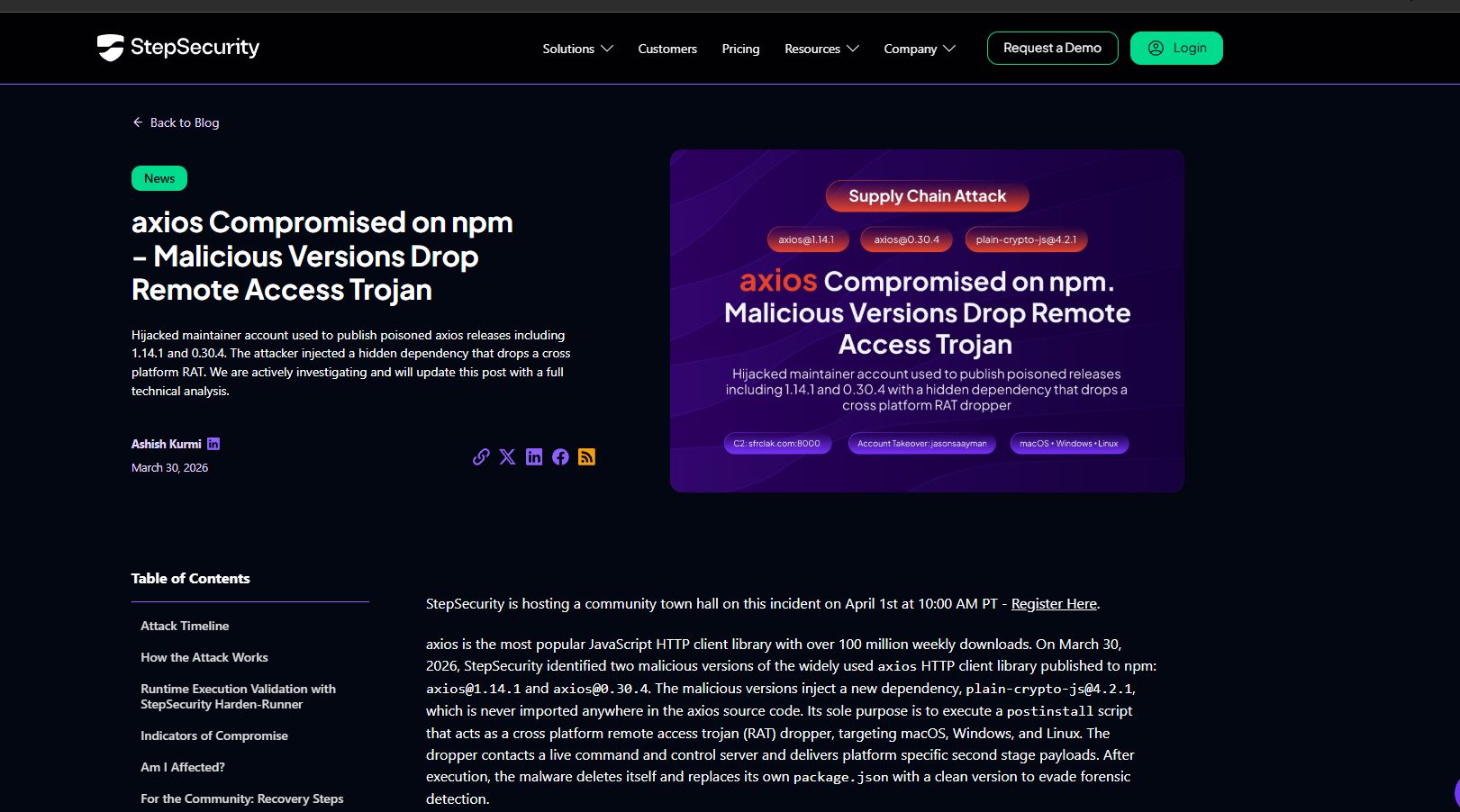
The Axios HTTP library used in roughly 80% of cloud environments had two malicious versions published after an attacker compromised a maintainer’s account. A hidden dependency installed a remote access trojan on machines that updated.
They used stolen credentials, default configurations, and the fact that npm has very few safety nets for what gets published and who can publish it.
How to Protect Your Projects
Lock Everything Down
Don’t rely on version ranges. Pin your dependencies to exact versions and use lockfiles with integrity hashes. This way, even if a malicious version gets published, your project won’t pick it up automatically.
Treat Tokens Like Passwords
npm tokens should be short-lived, scoped to specific packages when possible, and never stored in plain text on developer machines. In CI environments, use automation tokens with limited permissions and rotate them regularly.
Audit What You Publish
Before publishing a package, run npm pack --dry-run to see exactly what’s going to be included. Add a proper .npmignore or use the files field in package.json. Source maps, environment files, and build artifacts should never make it to the registry.
The Bigger Picture
Supply chain attacks aren’t new, but they’re getting more sophisticated and more frequent. The npm ecosystem is particularly exposed because of its size, its reliance on individual maintainers, and the amount of implicit trust baked into how packages are installed and published.
You can’t control what happens upstream. But you can control how much you trust by default, how quickly you’d notice something wrong, and how much damage a single compromised package could do in your environment
If you need support
For professional support regarding these security challenges or for assistance in establishing robust CI/CD pipelines, our team is available to help. Comprehensive contact details are available at: https://zazmic.com/contact-us/